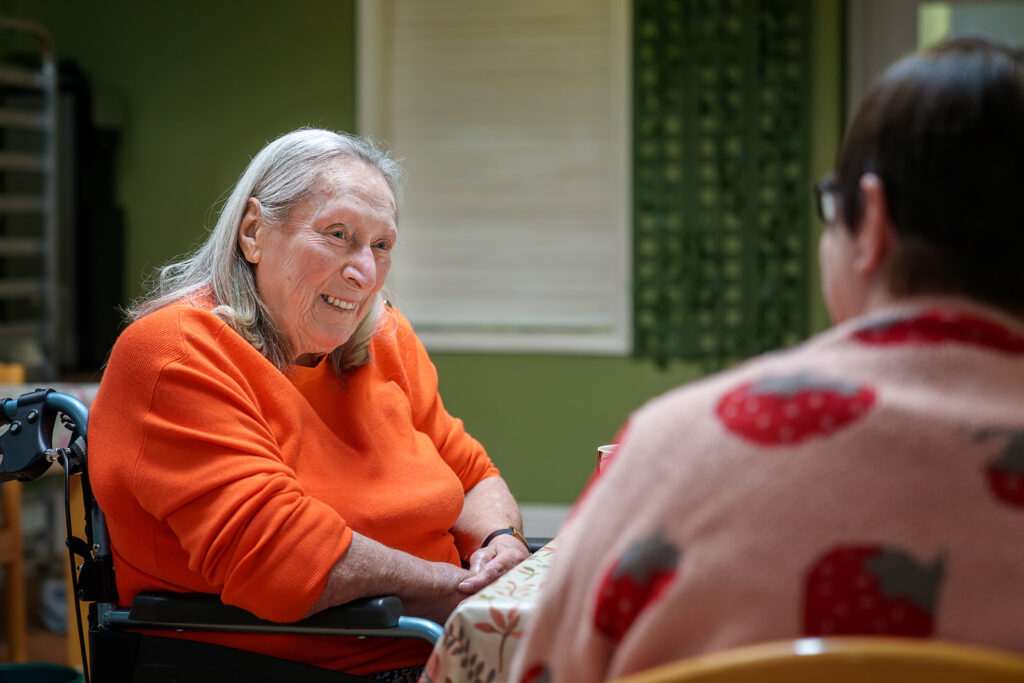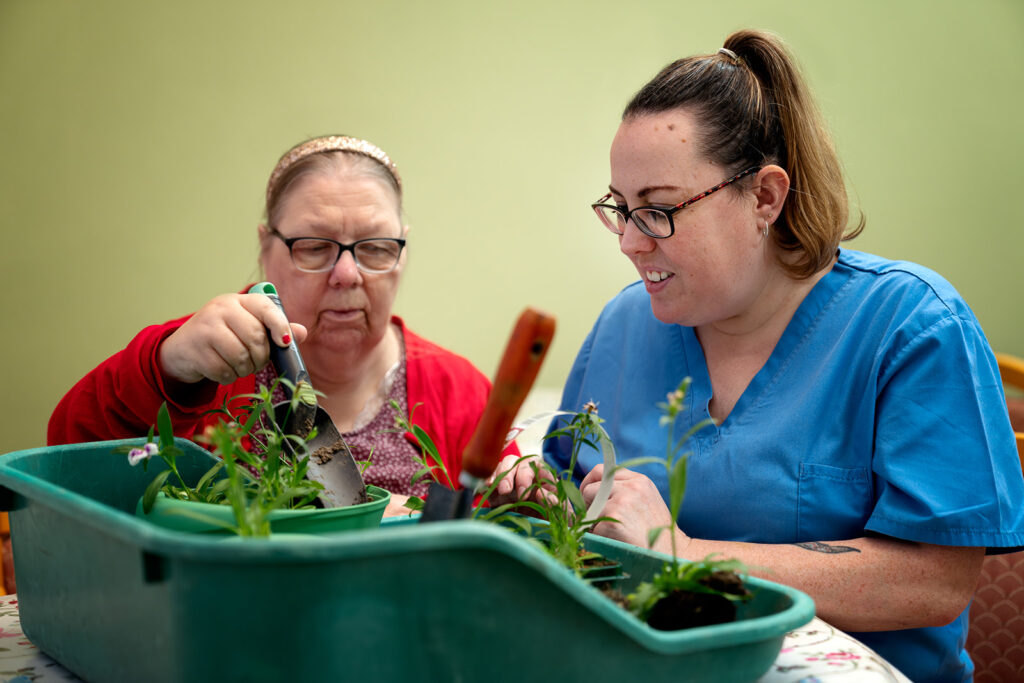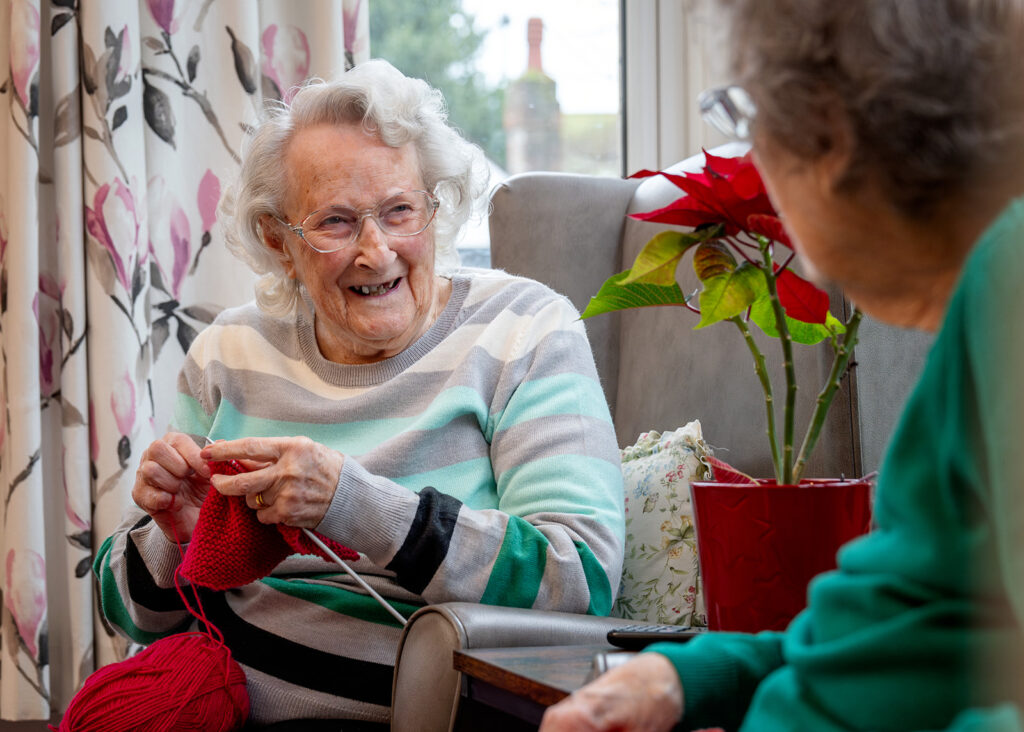

Across the UK, more than 900,000 people are living with dementia – a number expected to rise significantly over the next decade. Behind every statistic is a person with a story, a history, and a network of relationships that shape who they are. At Keychange, we see this every day across our communities. Dementia may change how someone experiences the world, but it never erases their identity.
As we mark Dementia Action Week, we want to share some reflections on what it truly means to live well with dementia, and how our approach is shaped by the people we support.
One of the most important things we’ve learned is that dementia affects far more than memory. It can influence how someone interprets sound, light, movement, and even the emotional tone of a room. A busy corridor may feel overwhelming. A sudden noise may feel threatening. A familiar object may bring comfort that words cannot. Understanding this helps us move away from a task‑based model of care and towards something far more human: supporting each person to feel safe, understood and connected. Living well with dementia is not about removing every challenge, rather it is about creating an environment where someone can thrive in ways that feel natural to them.
For many people living with dementia, familiarity is a lifeline. A favourite chair. A familiar song. A well‑worn cardigan. The rhythm of a morning routine. These small anchors help someone feel grounded when the world around them feels unpredictable. Across our communities, we pay close attention to these details. We notice which mug someone reaches for. Which route they prefer to walk. Which objects they linger over. These observations help us build a picture of what feels reassuring – and what may feel unsettling. Training is essential, and our teams undertake specialist dementia training to deepen their understanding of the condition. But the real heart of dementia‑informed care lies in relationships.
We learn who someone has always been:
This relational approach helps us respond not just to needs, but to the person behind them. It allows us to recognise when anxiety is really a sign of confusion, or when silence is a sign of tiredness rather than withdrawal. It helps us interpret emotion when words become harder to find.
When care is rooted in relationship, people feel seen rather than managed.
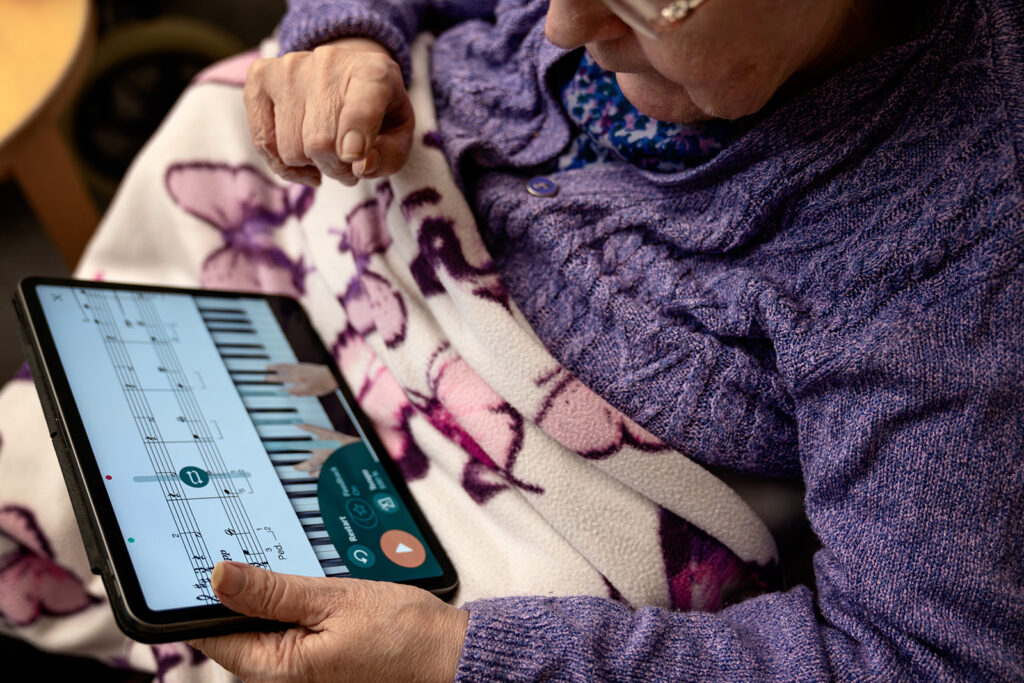
As dementia progresses, communication often shifts from language to emotion. Tone, facial expression, and body language become more important than ever.
We’ve learned that:
These moments of connection may be fleeting or profound, yet they always carry a quiet significance.
The role of environment in wellbeing
Environment plays a significant role in how someone with dementia experiences daily life. Across our communities, we focus on creating spaces that feel calm, predictable and comforting.
This includes:
These elements work together to reduce anxiety and support a sense of belonging.
Supporting families as partners in care
Dementia affects families as deeply as it affects individuals. Many relatives carry the emotional weight of caring long before a move into a residential community becomes necessary. When someone joins us, families often tell us they feel a sense of relief – not because they are stepping back, but because they can return to being a spouse, a daughter, a son, a friend.
We see families as partners in care. Their insight helps us understand the person’s history, preferences and personality. Their presence enriches the life of the community. And their wellbeing matters too.
Living well with dementia is possible
Dementia changes many things, but it does not diminish a person’s worth, identity or capacity for joy. We see people laugh, sing, reminisce, form new friendships, and find comfort in familiar routines. We see moments of clarity, moments of connection, and moments of deep peace.
Living well with dementia is not about avoiding decline. It is about ensuring that every person continues to experience dignity, meaning and belonging.